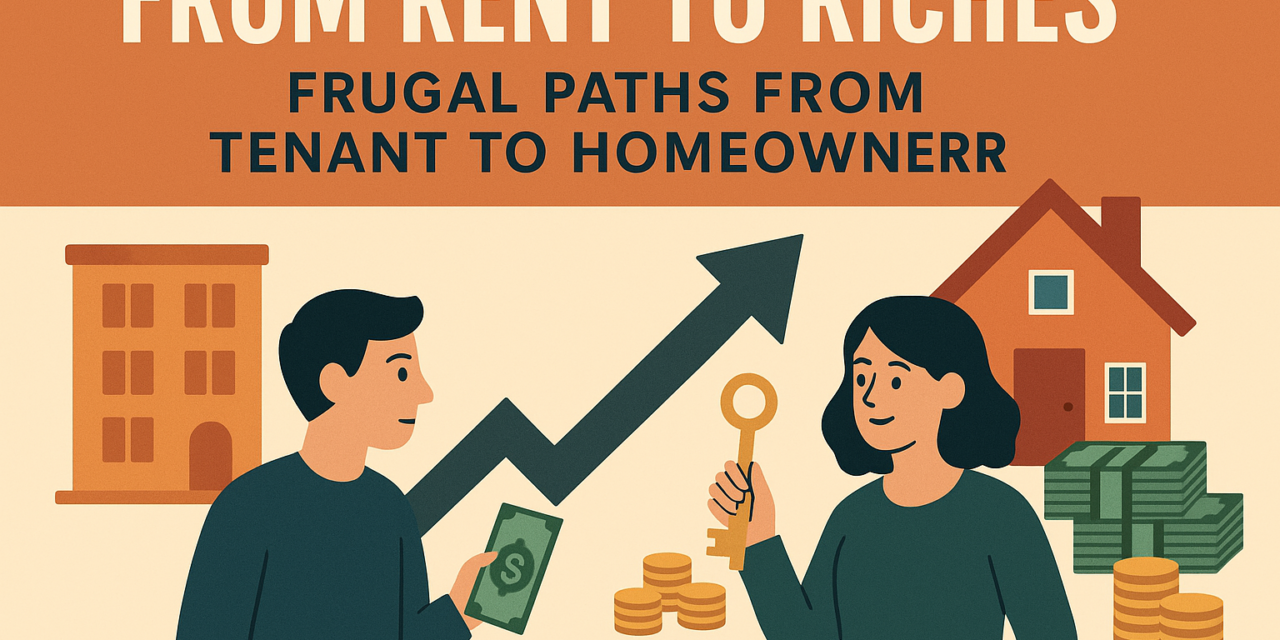
From Rent to Riches: Frugal Paths from Tenant to Homeowner
Set a clear homeownership number
Start with a target purchase price and a target monthly payment. Use the 28/36 rule lenders use. Keep housing costs near 28 percent of gross income. Keep total debt near 36 percent. If your income is 80,000, gross monthly income equals about 6,667. A safe housing payment sits near 1,800. Total debt, including housing, sits near 2,400.
Build from your payment target, not a wish list price. Run a quick translation. Every 10,000 in price often adds 60 to 75 to the payment at common rates, principal and interest only. Taxes, insurance, HOA fees, and mortgage insurance raise the total. Create a spreadsheet. List price, rate, down payment, taxes, insurance, HOA, PMI. Adjust until the payment fits your 28 percent cap.
Choose a firm timeline
Pick a window between 12 and 24 months. Short timelines demand aggressive savings and debt payoff. Longer timelines reduce pressure, yet risk price and rent changes. Put dates on the calendar. Give each quarter a goal, credit score, savings, debt paydown, preapproval, home search, closing.
Fix your credit fast
Credit drives interest costs. A move from the low 600s to the mid 700s lowers payments and mortgage insurance. Action steps for the next 90 days:
– Pull free reports from all bureaus. Dispute errors with documentation.
– Pay every bill on time. Set autopay to minimums. Pay statement balances on payday.
– Cut credit card utilization below 30 percent. Aim for under 10 percent for top scores.
– Avoid new accounts unless a secured card improves thin history.
– Ask for higher limits on old cards after balances fall. Lower utilization follows.
– Keep old accounts open. Age of credit helps scores.
Track scores monthly, not daily. Expect steady gains if you pay on time and reduce balances.
Kill high interest debt first
Interest near 20 percent blocks savings progress. Use the avalanche method. Pay minimums on all accounts. Direct all extra cash to the highest APR. Example for a renter with 5,000 at 24 percent APR and 3,000 at 19 percent APR. Paying 600 per month removes the 24 percent card in 10 months, interest near 550. Then roll the 600 into the 19 percent balance. Momentum builds.
Trim rent without upheaval
Lower rent grows your down payment faster than cutting groceries. Options:
– Negotiate renewal 60 days before expiration. Offer longer lease for a modest discount.
– Move to a smaller unit in the same building.
– Add a trustworthy roommate with a written agreement.
– Shift to a unit a few blocks farther from transit hubs.
– Target off season starts where local markets soften. Winter leases often price lower than peak summer.
Even 150 per month saved adds 1,800 in a year, not including interest on savings.
Increase income with focused sprints
Pick one path for 6 to 12 months.
– Ask for overtime where policy allows.
– Offer tutoring in a field you know.
– Earn a low cost certification that triggers a pay bump.
– Contract for weekend projects, photography, deliveries, or simple web work.
– Trade time for housing discounts, for example on site property support with reduced rent.
An extra 300 per month equals 3,600 per year. Pair this with a 150 rent cut and you free 4,950 per year. Direct every dollar to high interest balances or down payment savings.
Automate savings for the down payment
Open a separate high yield savings account or a short term Treasury account for funds needed within two years. Principal safety beats chasing returns. Move money the day your paycheck lands. Treat the transfer as non negotiable. Label subaccounts, earnest money, appraisal and inspection, closing costs, reserves.
Know your loan options
You do not need 20 percent down to buy.
– Conventional loans for first time buyers, as low as 3 percent down for strong profiles.
– FHA loans, 3.5 percent down with more flexible credit rules.
– VA loans, 0 percent down for eligible service members and veterans.
– USDA loans, 0 percent down in qualifying rural areas with income caps.
Mortgage insurance varies by program and credit. Private mortgage insurance on conventional loans often runs 0.5 to 1.5 percent of the loan per year. Example, a 350,000 home with 5 percent down has a 332,500 loan. PMI at 0.8 percent equals about 2,660 per year, about 222 per month. PMI drops once equity reaches required levels. FHA uses a monthly premium that lasts longer unless you reach a larger down payment at closing or refinance later.
Plan for closing costs and reserves
Closing costs often land between 3 and 5 percent of the purchase price, not including the down payment. On a 350,000 home, plan for 10,500 to 17,500. Line items include lender fees, title insurance, recording, transfer taxes where applicable, appraisal, inspection, and prepaid taxes and insurance. Build a three to six month reserve for mortgage, taxes, and insurance. A strong reserve lowers risk and stress.
Leverage assistance programs
First time buyer programs exist in many states and cities. Common features include down payment grants, forgivable loans, and reduced rates. Income and price limits apply. Steps:
– Search for your state housing finance agency.
– Check city or county programs where you plan to buy.
– Ask your employer about homebuyer benefits.
– Verify education course requirements early.
– Confirm how assistance integrates with FHA or conventional loans.
Treat assistance as a bridge, not as a crutch. Read the fine print on occupancy rules and repayment triggers.
Pick the right mortgage structure
Fixed rate loans offer stable payments. A 30 year term lowers the payment. A 15 or 20 year term crushes interest faster if income supports it. Compare lender credits against paying points. Points lower the rate for a cost at closing. Run a break even. Divide point cost by monthly savings to see months to recoup. If the horizon exceeds the break even by a safe margin, points help. If not, keep the cash for reserves.
Temporary buydowns shift payment relief to year one and year two. A 2 1 buydown lowers the rate by two points in year one and one point in year two. Sellers often fund buydowns in slower markets. Read buydown agreements with care.
Target neighborhoods with full cost in view
Price alone does not tell the story. Add property taxes, insurance, utility averages, and HOA dues. A lower priced home with high taxes might cost more each month than a slightly higher priced home with low taxes. Walk the block at different times. Check commute time during rush hours. Evaluate school zones if children enter your plan soon. Ask about upcoming assessments in HOA communities.
Use house hacking to lower net housing cost
A small multifamily or a single family with an accessory unit reduces your net payment. FHA financing allows duplex to fourplex with 3.5 percent down if you live in one unit. Example, a duplex purchase at 450,000 with 3.5 percent down leads to a loan near 434,250. If the other unit rents for 1,800 and your all in monthly payment equals 3,200, your net housing cost drops to 1,400 before maintenance. Screen tenants well. Keep leases tight. Maintain reserves higher than for single family homes.
Budget for ownership costs after closing
Set a maintenance reserve equal to 1 to 3 percent of home value per year. On a 350,000 home, save 3,500 to 10,500 per year. Older homes need more. New homes need less early on. Add these monthly line items to your budget:
– Property tax and homeowners insurance if not escrowed.
– HOA dues and special assessments risk.
– Utilities higher than apartment living, water, trash, gas, electric, internet.
– Lawn care, snow removal, basic tools.
– Sinking fund for roof, HVAC, water heater, and appliances.
Treat ownership like a business. Plan cash flow and reserves before upgrades.
Make strong offers without regret
A complete file improves speed and confidence. Steps:
– Secure a full preapproval, not a quick prequalification.
– Limit contingencies with care, inspection, financing, and appraisal protect you.
– Use seller credits to cover closing costs or rate buydowns when the market allows.
– Time your offer to listing age. Older listings often accept concessions.
– Avoid bidding wars that break your 28 percent target.
A focused 18 month path
Months 1 to 3
– Pull credit, fix errors, set autopay.
– List debts, APRs, and balances. Start avalanche.
– Build a strict budget. Cut rent or add a roommate.
– Open dedicated savings. Automate transfers on payday.
Months 4 to 9
– Maintain on time payments. Drive utilization below 30 percent, then under 10 percent.
– Increase income with one targeted side path.
– Grow down payment and closing funds to at least 5 to 8 percent of target price.
– Research local assistance programs and education courses.
Months 10 to 12
– Interview three lenders and one credit union. Compare total cost, not teaser rates.
– Secure preapproval with documents, W 2s, pay stubs, bank statements.
– Tour neighborhoods at different times of day. Track taxes, insurance, HOA data.
Months 13 to 18
– Start active search with a buyer agent who understands first time buyers.
– Order inspection on accepted offer. Negotiate repairs or credits.
– Lock your rate after lender quote comparisons.
– Complete closing checklist. Fund reserves equal to three to six months.
Case study with numbers
Profile, Jordan, 29, salary 78,000, rent 1,850, student loan 220 per month, credit card 4,000 at 23 percent APR, credit score 670. Target home price 350,000 within 18 months.
Quarter 1
– Negotiates a 75 per month rent reduction for a 12 month renewal.
– Adds weekend tutoring, 300 per month net.
– Pays 600 per month to the 23 percent card while keeping minimums on other debts.
– Opens a high yield savings account labeled Down Payment and transfers 400 per month.
Quarter 2
– Credit card balance falls below 2,900. Requests a limit increase on a long held card, approved, utilization drops.
– Score rises near 700. Keeps on time payments across all accounts.
– Raises savings to 500 per month as side income stabilizes.
Quarter 3
– Pays off the 23 percent card. Rolls the 600 into savings for down payment.
– Down payment fund reaches 6,500.
– Completes a first time buyer education course for a state program.
Quarter 4
– Income grows with a small raise. Savings rise to 1,200 per month.
– Preapproval shows two options.
– Conventional, 5 percent down, total payment estimate 2,650 including taxes, insurance, and PMI.
– FHA, 3.5 percent down, total payment estimate 2,740 including mortgage insurance.
– Chooses conventional for easier PMI removal later.
Quarter 5 and 6
– Offer accepted on a 345,000 townhome with HOA 180 per month.
– Down payment 5 percent equals 17,250. Closing costs negotiated with a 4,000 seller credit. Out of pocket totals near 18,000 due to prepaid items and fees after credits.
– Payment breakdown, principal and interest 1,880, taxes 360, insurance 95, HOA 180, PMI 210, total near 2,725 per month.
– Rent from a trusted roommate in the second bedroom, 900 per month with a written lease.
– Net outflow near 1,825, close to the old rent while building equity.
Twelve months after closing
– PMI falls after a small principal curtailment and value gain. Reverification removes PMI, saving 210 per month.
– Reserves equal six months of payments.
– Equity rises from payments and moderate price growth.
Common traps to avoid
– Skipping inspection to win a bid. Costly surprises follow.
– Draining every dollar for closing. A thin reserve invites stress.
– Ignoring HOA budgets and pending assessments.
– Taking on a car payment before mortgage preapproval. DTI balloons.
– Letting lifestyle creep eat raises and side income.
A short list of frugal wins
– Split streaming and internet with roommates on a clear schedule.
– Buy used furniture and tools. Keep receipts and a moving checklist.
– Meal prep two nights per week. Bank the savings.
– Reprice auto and renters insurance annually.
– Sell idle items online and route proceeds to debt or savings.
Social media post version
– Goal, payment under 28 percent of gross income
– Timeline, 12 to 24 months with quarterly targets
– Credit, on time pay, under 10 percent utilization, no new debt
– Debt, avalanche high APR first
– Rent, negotiate, downsize, add a vetted roommate
– Income, one focused side path for 6 to 12 months
– Savings, automate to a separate account with labels
– Loans, 3 to 5 percent down options exist
– Costs, plan 3 to 5 percent for closing and build reserves
– House hack, duplex or ADU to cut net payment
– Offer, full preapproval, smart contingencies, use seller credits
– After closing, save 1 to 3 percent of value per year for maintenance
Your next three moves
– Set a firm payment target and a price range that fits it.
– List debts with APRs. Start avalanche payments today.
– Open a dedicated savings account. Automate transfers on payday.
Steady actions each month move you from tenant to owner. Keep the 28 percent rule in view, preserve reserves, and buy with discipline. This approach builds equity and peace of mind without lifestyle whiplash.