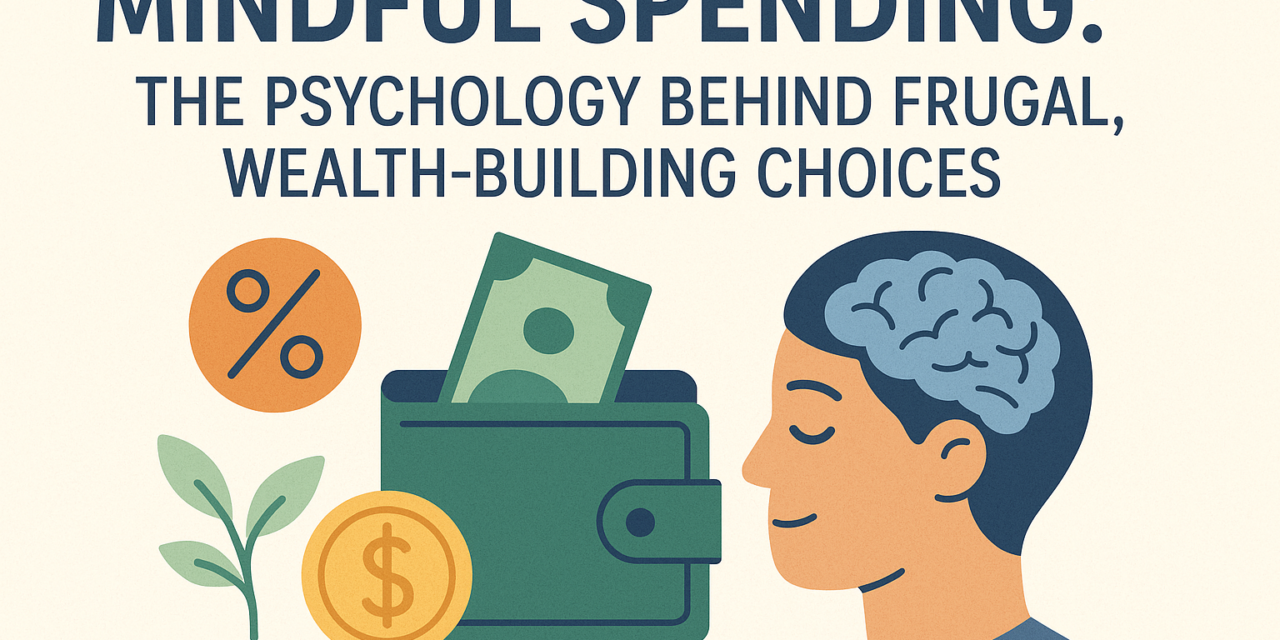
Mindful Spending: The Psychology Behind Frugal, Wealth-Building Choices
Why this matters in your late 20s and early 30s
You face real money tradeoffs. Loans press on cash flow. Rents feel high. Career growth still takes shape. Retirement feels distant, yet compound growth rewards early action. You want a life with options. Mindful spending helps you fund those options without burnout.
Mindful spending aligns habits with goals. It cuts waste without deprivation. It builds wealth through small, repeatable moves. The approach relies on psychology which guides daily choices. You set systems which reduce friction. You design defaults which protect savings. You remove temptations before they drain your paycheck.
The psychology behind mindful spending
Present bias steers attention to now. Future benefits feel weak next to instant pleasure. Automation and pre-commitment move savings to the front of the line.
Loss aversion hits harder than gains. A dollar lost feels worse than a dollar earned feels good. Framing helps. Treat recurring bills which do not serve you as losses. Cutting them feels like relief.
Choice overload drains willpower. Fewer, clearer options lead to better outcomes. Set a short list of rules. Follow them every time.
Habit loops drive behavior. Cue, routine, reward. Trigger savings with payday alerts. Run your steps in the same order. Reward progress with a small, planned treat.
Social proof influences decisions. Money talk in your circle sets norms. Choose peers who respect savings, skill growth, and long-term goals.
Set goals with numbers
Goals need numbers, dates, and reasons.
– Emergency fund, three to six months of bare-bones expenses in a high-yield account
– Debt plan, wipe high-interest balances first, then roll payments forward
– Investing, target a 15 to 25 percent total saving and investing rate across retirement and brokerage
– Big purchases, save in advance with a date and a target number
– Lifestyle, pick one or two premium areas which bring real joy, spend with intent there, trim elsewhere
Write goals in one place. Add monthly checkpoints. Tie each goal to an action you perform on payday.
Automate good choices
Remove daily decision fatigue. Set systems which act without prompting.
– Split direct deposit, a fixed slice goes to savings and investments first
– Retirement, turn on contributions to reach any employer match, then raise by one point each quarter until you hit your target rate
– Brokerage, set a monthly transfer plus auto-invest into low-cost index funds
– Bills, auto-pay fixed amounts to avoid late fees
– Savings challenges, schedule a quarterly bump to savings by an extra 25 or 50 dollars
Automation turns intentions into results. Your budget improves while you work, study, or rest.
Build frugal defaults
Defaults shape outcomes more than rare heroic effort.
– Housing, keep rent or mortgage near 25 to 30 percent of take-home pay
– Transport, favor used cars with low total ownership cost, consider transit or biking for short trips, batch errands
– Food, plan five core dinners per week, cook once for two nights, pack one or two work lunches
– Subscriptions, maintain a list with prices and renewal dates, drop one each month until only high-value items remain
– Shopping, use a 24-hour hold on nonessential items over a set dollar limit
You still enjoy life. You direct more dollars to priorities which matter most.
Use mental accounting on purpose
Your mind already sorts money into buckets. Give those buckets clear labels which guide behavior.
– Bills account, only fixed expenses live here, keep one month of cushion
– Freedom fund, emergency cash for layoffs or surprise repairs
– Big purchases fund, vacations, weddings, home projects, tech upgrades
– Fun money, a fixed weekly amount for guilt-free spending
Separate accounts reduce accidental overspending. You see progress without mixing rent money with travel goals.
Make spending visible
Visibility weakens impulse buying and strengthens control.
– Weekly money date, 20 minutes, same time each week, review transactions and goals
– One-number dashboard, track three metrics, savings rate, total debt, net worth
– Alerts, set app alerts for purchases over a threshold, or for low balances
– Cash or debit for problem categories, groceries or dining, when credit temptations run high
Small frictions like alerts or a manual swipe at checkout slow poor choices.
Tame impulses with simple rules
Rules remove guesswork and protect cash flow.
– 1 percent rule, any single buy over 1 percent of monthly take-home waits 24 hours
– 10x hourly rule, if an item costs more than 10 times your hourly wage, pause and review
– One-in one-out, for clothes or gadgets, one new item enters only when one leaves
– List or no buy, weekly list for groceries and household goods, no list means no purchase
– Unsubscribe, reduce marketing emails and feeds which trigger spending
These rules feel small. Over one year they shield thousands of dollars.
Make debt payoff a priority
High interest balances slow wealth building. Interest often equals hundreds of dollars per year.
– Example, a 3,000 balance at 20 percent interest burns about 600 per year until paid off
– Pay more than the minimum on the highest rate first, move freed payments to the next balance
– Refinance or consolidate only if total cost drops and terms stay clear and fixed
Debt freedom raises cash flow for investing and experiences you value.
Invest while you spend
Cards with rewards help if you pay in full each month. Interest wipes out rewards, so avoid balances. Pair rewards with automation.
– Use one rewards card for categories you spend on, such as groceries or travel
– Pay in full on the same day each month
– Send rewards to savings or investments rather than impulse buys
Round-up transfers also help. Small drips into investing grow over time.
Grow income without burnout
Frugality stretches dollars. Income growth multiplies momentum.
– Salary, prepare a one-page case with results, numbers, and scope, ask during review season or after a big win
– Skills, pick one skill which lifts pay within 6 to 12 months, sales, data analysis, SQL, project leadership, prompt engineering, UX writing, or trade certifications
– Freelance or on-call shifts, choose work which fits your energy and schedule, protect sleep and health
– Networking, schedule two short catch-ups per month, ask for specific advice or referrals
Every raise without lifestyle creep feeds savings and investing.
Math which motivates
Numbers beat slogans. Use them to anchor habits.
– Monthly investing of 400 at a 7 percent annual return for 10 years grows to roughly 69,000
– Raise investing to 600, the 10-year total reaches roughly 103,500
– Delay by five years, then invest 600 for 10 years, the total lands far lower than starting early with 400, time in the market matters
These are estimates which exclude taxes and fees. The point stands. Early, steady action wins.
A sample budget on 5,000 take-home per month
This example shows one way to balance life and growth. Adjust for your numbers.
– Savings and investing, 1,000, includes retirement and brokerage
– Housing, 1,400
– Utilities and internet, 250
– Groceries, 450
– Dining and coffee, 250
– Transport, 350, fuel, transit, insurance, maintenance
– Health, 150, premiums, prescriptions, out-of-pocket
– Debt payments, 450, student loans and any other fixed debt
– Insurance, 100, renters or homeowners, term life if needed
– Phone, 60
– Fun money, 200
– Big purchases fund, 200
– Travel fund, 140
Annual goals also help. Plan a 2,000 travel goal, add 170 per month. Plan a 1,200 laptop upgrade, add 100 per month. Fund both inside the sample above by shifting fun money or dining.
Design an environment which supports your goals
Behavior follows environment. Change the environment, behavior follows.
– Remove saved cards from retail sites
– Delete shopping apps you do not need
– Keep a wish list in a notes app, revisit on the 24-hour hold
– Place a sticky note on your card, reads pay in full
– Store savings targets as phone widgets
– Keep a printed debt payoff tracker on your desk
Small design tweaks create daily reminders without effort.
Money conversations which help
You influence friends, and they influence you. Build a crew which values progress.
– Share one goal with a trusted friend
– Text a screenshot of your weekly check-in
– Swap tips on meal prep, transit passes, or used gear sources
– Celebrate debt payoffs and savings milestones
Positive pressure supports discipline when motivation dips.
Career and money sync
Align money systems with career seasons.
– Early role, focus on skills and relationships, keep lifestyle lean, invest in courses with short payback
– Mid climb, lock in a higher savings rate during raises, avoid inflating fixed costs
– Transition, hold larger cash reserves before switching jobs or cities
Your money plan should reflect the season you live in, not a template from someone else.
Scripts and templates for daily use
Keep scripts handy. Use them without overthinking.
– Price match script, I saw a lower price from X, can you meet it, wait, swap to, I saw a lower price from X, will you match it
– Fee waiver script, I noticed a fee on my account, I have been a customer for three years, will you remove it
– Rent negotiation script, I like living here, if I renew for 12 months, would you keep rent at current level, or limit any increase to 2 percent
Edit wording to fit your style, keep it polite and firm. Track wins and repeat what works.
What to do this week
No need for a full overhaul. Apply a short list and move forward.
– Open a high-yield savings account for your emergency fund
– Set 10 percent of take-home to transfer to savings on payday
– Turn on retirement contributions to reach, or move toward, any match
– List every subscription with price and date, cancel one today
– Start a weekly money date on Sunday evening
– Create a 24-hour hold rule for any buy over 1 percent of take-home
– Move credit card due dates to match payday
– Build a one-page goal sheet with three targets for the next 90 days
Momentum grows from simple, consistent actions.
Social post version
- Automate savings on payday, money moves before you see it.
- Use a 24-hour hold for buys over 1 percent of take-home.
- Cut one subscription this month.
- Track three numbers, savings rate, total debt, net worth.
- Pick one high-ROI skill, level up within 6 to 12 months.
- Pay cards in full, interest kills rewards.
- Fund a 3 to 6 month emergency reserve.
- Share one goal with a friend, add accountability.
Keep momentum for the long run
Schedule reviews and upgrades.
– Weekly, money date, review spending and goals
– Monthly, raise savings or investing by one point, cancel or renegotiate one bill
– Quarterly, check net worth and debt progress, adjust targets
– Annually, raise retirement contributions with every salary bump, rebalance investments if needed
Your late 20s and early 30s set the base for decades. Mindful spending plus steady investing builds options. You gain freedom to choose work you enjoy, support people you love, and fund a life with fewer money worries.