Small Business Retargeting: Bring Back Visitors Who Didn’t Buy
Why retargeting matters right now
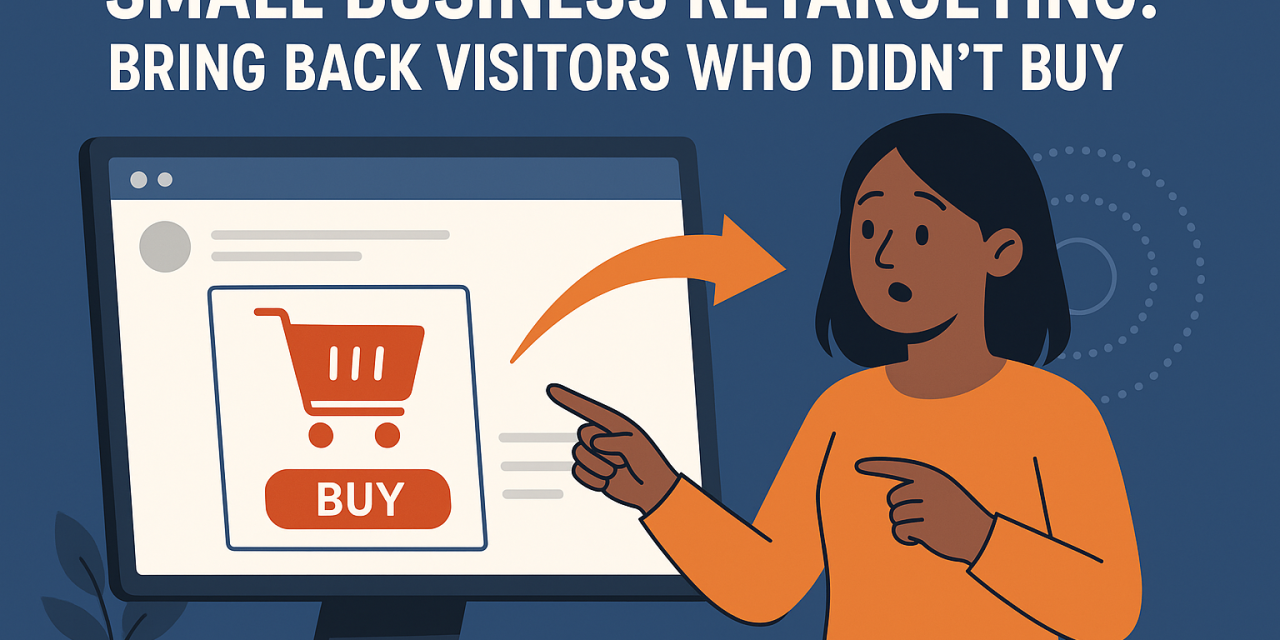
If your site gets any traffic at all—organic, social, or paid—you’re sitting on a pile of warm interest. Most people won’t buy on the first visit. They browse on the train, they get a Slack ping, they plan to “come back later.” Retargeting is how you turn those near-misses into revenue. For small businesses, it’s the most efficient ad spend you can deploy: low cost per impression, higher intent audiences, and messaging you can tailor precisely because you know what they looked at.
This guide is built for creators who already know their way around cameras and editing timelines. You’ve got the content chops; now you’ll turn that into a performance engine that brings back visitors who didn’t buy.
How retargeting works in 2025 (and what’s changed)
The basics haven’t changed: you tag your site or app, build audiences from people who visited or took certain actions, then serve them ads later. What has changed is privacy and tracking:
– Third‑party cookies continue to fade. Expect smaller web audiences from cookie-based lists.
– First‑party data is king. That means your own pixels, server-side tracking, and email/SMS consent matter more than ever.
– Conversions APIs and enhanced conversions help fill gaps so platforms can still optimize.
Practical translation:
– Install your retargeting tags and events with both a browser pixel and a server connection where possible (e.g., Conversion API/Server-Side Tagging).
– Keep your consent banner clean and fast. If a user rejects tracking, don’t stuff them into retargeting; focus on contextual and owned-channel follow-ups instead.
– Expect audience sizes to be smaller than pre‑privacy eras. That’s okay—quality beats quantity.
Essential building blocks: events and audiences
Set up these core events on your site or shop:
– Page View (all visitors)
– View Content or Product View (viewed a product or service page)
– Add to Cart / Start Checkout
– Lead or Email Sign-Up
– Purchase (with value and currency)
Create these starter audiences:
– All site visitors last 7, 14, 30, and 90 days
– Viewed product/service but didn’t add to cart (7/14/30 days)
– Added to cart but didn’t purchase (3/7/14 days)
– Started checkout but didn’t purchase (1/3/7 days)
– Engagers: watched your videos or engaged with your social profile in the last 30 days
– Email subscribers who have not purchased
– Past purchasers for cross-sell/upsell (exclude them from first‑purchase campaigns)
Tip: Build recency tiers. Someone who bounced yesterday needs different creative than someone from 60 days ago. Short windows (1–7 days) get “hot” messaging; longer windows (14–60+) get education and new angles.
Channel-by-channel game plan
Meta (Facebook + Instagram)
– Best for: broad retargeting at scale, dynamic product ads for catalogs, Reels/Stories video.
– Setup: pixel + Conversions API, upload product catalog if you sell SKUs. Create dynamic retargeting to show people the exact products they viewed.
– Creative: short vertical video with a hook in the first 1–2 seconds, creator or founder voiceover, captions on, 6–20 seconds.
– Bidding: use “Sales” or “Leads” objectives with purchase/lead event optimization. Cap frequency for small audiences (aim 1–3 per day on narrow windows).
– Pro move: Exclude purchasers in the last 14–30 days to avoid wasted impressions.
Google Ads (YouTube + Search + Display)
– Best for: YouTube video sequences, dynamic remarketing for e‑commerce, branded search protection.
– Setup: Google tag with enhanced conversions; link GA4 so you can import audiences. Enable dynamic remarketing for product feeds.
– Creative: 6‑second bumpers for quick reminders; 15–30 second YouTube in‑stream to address objections; responsive display with strong headlines.
– Search: bid on your brand; layer audiences of “cart abandoners” with higher bids for those users.
TikTok Ads
– Best for: creative-first audiences, impulse-friendly products, authentic founder content.
– Setup: TikTok pixel + Events API. Build audiences for video viewers and site actions.
– Creative: native-feel clips—handheld, jump cuts, subtitle overlays. 9–15 seconds. Hook: “Still thinking about [product]? Here’s what you missed.”
– Tip: Use Spark Ads to boost organic posts that already showed signs of interest.
Email and SMS (owned channels)
– Best for: zero media cost follow-up and deep storytelling.
– Setup: Two to three cart/checkout abandon flows; 1–2 browse abandonment emails; SMS as a gentle nudge for recent viewers.
– Creative: GIF or short embedded video demo; social proof; quick-reply buttons.
CTV and programmatic display (optional)
– Best for: higher AOV products and local service businesses wanting “everywhere I look” presence. Use sparingly with frequency caps.
Creative that converts: what to say and show
You already know how to shoot and edit. Here’s how to shape retargeting content.
Core angles:
– Risk removal: guarantees, free returns, try-before-you-buy.
– Social proof: “Over 10,000 happy customers,” UGC clips, creator reactions, star ratings.
– Objection busting: shipping time, sizing, compatibility, how it actually works.
– Scarcity or urgency: limited drop, seasonal cutoff, price increase date.
– Value stacking: bundle savings, bonus tutorial access, free accessory.
Three video templates you can record this week:
1) The 15‑second “Still deciding?” ad
Hook: “Still thinking about [product]? Three reasons people switch.”
Body: quick cuts of problems solved, one benefit per cut.
Close: “Order by [date] for free shipping. Tap to finish your cart.”
2) The UGC testimonial mashup
Hook: “Real customers on their first week with [brand].”
Body: stitch 3–5 short clips from customers; overlay captions with key quotes.
Close: “Try it risk‑free for 30 days.”
3) The founder FAQ
Hook: “Top questions before you buy [product].”
Body: answer the 3 most frequent pre‑purchase questions, straight to camera with b‑roll overlays.
Close: “If you’re on the fence, start with [entry bundle].”
Static and display assets that work:
– Before/after images with a headline that calls out the transformation.
– One clean product shot with a bold testimonial and star rating.
– Price/offer card: show the exact bundle price, what’s included, and the savings.
Copy swipes you can adapt:
– “Left something behind? We saved your cart—complete your order in 2 clicks.”
– “You saw [Product]. Here’s what 2,147 buyers say after week one.”
– “Free exchanges + 30‑day trial. Try it, don’t overthink it.”
Sequencing your retargeting
Structure your sequence by intent and time.
Days 1–3 after visit
– Audience: cart/checkout abandoners, product viewers.
– Messaging: urgency, risk reversal, dynamic product ads.
– Frequency: 1–2 per day per platform max.
– Channels: email/SMS first, then Meta/TikTok/YouTube.
Days 4–14
– Audience: all visitors and engagers.
– Messaging: education + social proof. Show use cases and outcomes.
– Creative: testimonials, founder FAQs, comparison charts.
– Offer: modest incentive (free shipping, small discount) if that fits your brand.
Days 15–60
– Audience: colder retargeting.
– Messaging: new angles—seasonal use, bundle, or a different hero benefit.
– Offer: time-bound promotions or value adds.
– Exit: after 45–60 days, move users to a lower‑frequency nurture or exclude to prevent fatigue.
Budgeting and bidding for small business realities
– Start by allocating 20–30% of your paid media budget to retargeting. If your traffic is low, your retargeting will naturally spend less; that’s fine.
– Prioritize high‑intent pools first (cart/checkout) before funding broad visitor retargeting.
– For tiny audiences, avoid overbidding. Let the platforms optimize on purchase events with capped frequency.
– Watch effective frequency. If your CTR falls and CPMs rise, you’ve hit saturation—rotate creatives weekly for hot pools and biweekly for warm pools.
– Use cost caps or target ROAS where available, but don’t choke delivery on micro audiences. Sometimes “lowest cost” with frequency caps works better.
Measurement that actually helps you improve
Track these:
– Funnel rates: product view to add‑to‑cart, add‑to‑cart to checkout, checkout to purchase. Retargeting should lift each step.
– Creative diagnostics: hook rate (3‑second views), scroll stop (first 2 seconds), thumb‑stopping frame.
– CPA and ROAS by audience tier (cart, checkout, product view, all visitors).
– Blended metrics: overall MER (total revenue divided by total ad spend). If MER improves when you launch retargeting, it’s working even if platform ROAS looks modest.
– Post‑purchase survey: “How did you hear about us?” Add choices for the retargeting channels you use.
– Incrementality tests: run short holdouts (e.g., pause retargeting in one region for a week) to see lift vs. control. Small business version: 80/20 split where 20% of your audience doesn’t receive retargeting for seven days.
Offers and onsite fixes that supercharge retargeting
You can’t out‑advertise a leaky checkout, so plug on‑site friction as you retarget:
– Shipping transparency: show costs and delivery dates before checkout.
– Payment options: add Shop Pay/Apple Pay/PayPal; display trust badges.
– Returns: make your policy short and friendly.
– Reviews: feature 3–5 high‑impact reviews near the add‑to‑cart button.
– Live chat or fast FAQ access: “Ask us anything in 2 minutes.”
– Exit‑intent capture: if someone moves to close the tab, offer a guide, checklist, or small incentive to capture email for owned follow-up.
Data, privacy, and consent (keep it clean)
– Be clear in your privacy policy about what you collect and why.
– Use consent banners that respect local laws and user choices.
– Don’t retarget users who opt out. Instead, lean on contextual content, SEO, and email/SMS from explicit opt‑ins.
– Regularly refresh your customer list uploads; keep only what you need.
Avoid these common retargeting mistakes
– Audience overlap and double‑serving: exclude purchasers and higher‑intent segments from broader pools so you don’t show the same ad five times in a day.
– Over‑reliance on discounts: you can train your audience to wait. Use value adds and risk reversal first.
– Stale creative: hot audiences burn out in days, not weeks. Rotate hooks and thumbnails quickly.
– One‑size‑fits‑all window: a 180‑day visitor may not even remember you. Adjust the offer and storytelling.
– Ignoring mobile speed: a 3‑second delay can kill conversion. Optimize images and scripts.
A one‑week launch plan
Day 1: Implement tags and server‑side tracking. Install pixel, connect the conversions API/server tagging. Configure events: view content, add to cart, begin checkout, purchase.
Day 2: Build audiences and exclusions. Create 7/14/30/90‑day windows. Exclude purchasers and recent email subscribers from “first purchase” ads.
Day 3: Shoot three retargeting videos (still deciding, UGC mashup, founder FAQ). Export vertical 1080×1920 with burned‑in captions. Cut a 6‑second bumper for YouTube.
Day 4: Design two static templates (testimonial card, before/after), plus a dynamic product feed if applicable. Prep copy variants: urgency, education, social proof.
Day 5: Launch email/SMS flows for browse and cart abandonment. Test links, images, and timers. Set send windows to match ad cadence.
Day 6: Build campaigns in Meta, Google/YouTube, and TikTok. Set frequency caps, budgets, and exclusions. QA all URLs with UTM parameters for clean measurement.
Day 7: Go live. Monitor delivery, CTR, add‑to‑cart rate, and first purchases. Be ready with two new hooks to swap in for hot audiences by Day 10.
Creative prompts to spark your next ad batch
– “I tested [product] so you don’t have to—here’s the 30‑second breakdown.”
– “3 mistakes people make before buying [category] and how to avoid them.”
– “Unbox + first use: what surprised me most.”
– “If you’re comparing [your brand] vs [common alternative], watch this.”
Turning content skills into a retargeting advantage
Your camera and editing skills are your superpower. Most small businesses use stock photos and generic headlines; you can show real hands, real faces, and real results. Record in natural light, keep cuts fast, use captions, and talk to one person. Make a spreadsheet of hooks, pain points, and objections; film in batches every two weeks; and keep a rolling creative library you can slot into hot, warm, and cold retargeting tiers.
If you do this consistently—clean data, tight audiences, smart sequencing, and creator‑grade ads—you’ll watch your “almost buyers” turn into customers, your cost per acquisition drop, and your brand show up exactly when people are ready to act. That’s the compounding power of retargeting for small businesses.