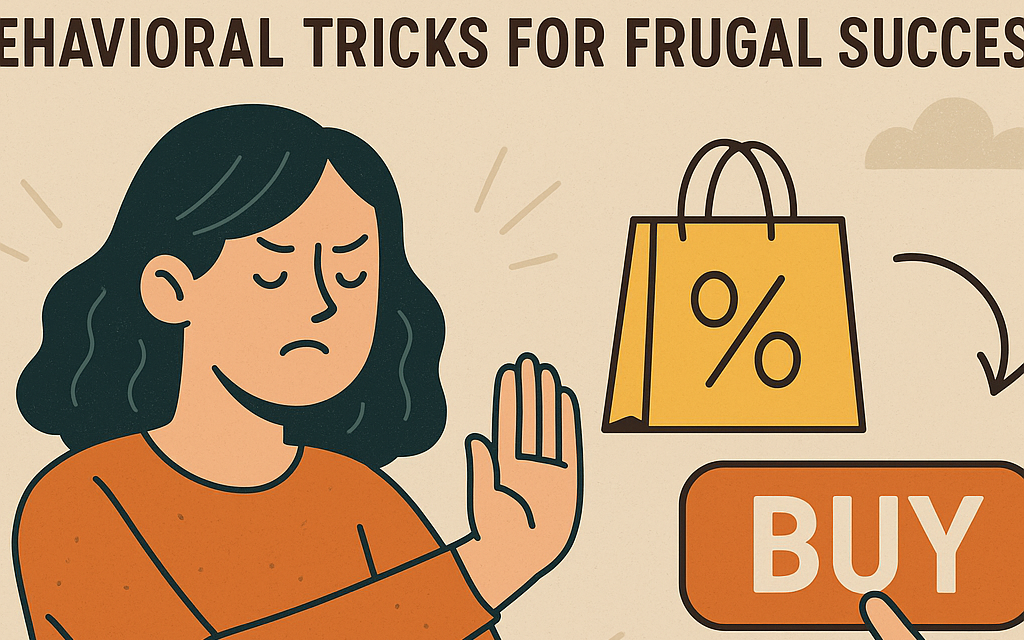
Beat Impulse Buying: Behavioral Tricks for Frugal Success
Why impulse buying spikes in your late 20s and early 30s
You hold more financial freedom than in college years, yet you face tighter time and higher stress. Push alerts, flash sales, one click checkout, and social feeds compete for your attention. Present bias tilts choices toward near-term pleasure over long-term security. Small frictions fade as income rises. Mental fatigue after work erodes discipline. Retail design exploits scarcity cues, limited drops, and countdown timers. Each element adds speed, emotion, and convenience, which favors quick purchases. You win by slowing the moment, adding friction, and pre-committing to rules which beat urges.
Define clear spending rules that remove guesswork
Ambiguity feeds impulse. Rules cut ambiguity. Write rules, post them on your phone lock screen, and revisit weekly.
– No-buy list. Pick three categories which drive regret. For many people this includes ride shares, in-app game items, and flash sale clothing. Zero purchases for 30 days.
– Spend ceilings by category. Food delivery, bars, coffee, gadgets, skin care. Example, food delivery 120 dollars per month, bars 100, coffee 40, gadgets 50, skin care 25.
– Two-day rule for wants. Save the item, wait 48 hours, then review with a clear head. If interest drops, delete. If interest holds, run the checklist in the next section.
– One-in, one-out. For clothing, tech, or kitchen gear, remove one item before any new item enters your home.
– Pre-set gift limits. Birthdays, weddings, and holidays, one number, one list, no exceptions.
Keep rules short and binary. Write them in plain language. Tie each to a single number or action.
Insert friction into every path to spend
Impulse thrives on speed. Your job is to slow it.
– Remove saved cards from browsers and retail apps.
– Turn off one tap checkout in each store profile.
– Delete shopping apps which trigger late night scrolling.
– Unsubscribe from retailer emails, use built-in unsubscribe or a service which batches promos to one digest per week.
– Turn off push alerts for sales and cart reminders.
– Move social media off your home screen. Place it in a folder on the last page.
– Use a different browser for shopping, with no passwords saved.
– Set your phone to grayscale in the evening. Colors drive clicks.
These steps raise effort at the exact second a purchase tries to happen.
Use commitment devices which protect paychecks
Structure beats willpower. Build guardrails around money movement.
– Direct deposit split. Route fixed bills to Account A. Route variable spending to Account B. Move savings to Account C at payday.
– Weekly allowance transfer. Move a set amount each Friday into a debit-only wallet for dining out and small treats.
– Sinking funds. Create sub-accounts for travel, gifts, and car upkeep. Auto-transfer small amounts twice a month. When an expense hits, use the matching bucket.
– Prepaid gift cards for problem stores. Load 50 to the store you overuse. When it runs out, stop until next month.
– Shared rule with a friend or partner. Text each other any item over 50 dollars before purchase. No message, no buy.
You remove cash from vulnerable zones, then spend from capped buckets.
Run a pre-purchase checklist every time
Bring logic into the moment. Keep this list in Notes. Open it before checkout.
– Is this a need or a want. Write one sentence.
– Will I use it this week. If not, move to wishlist.
– Price per use. If shoes at 120 will see 60 wears this year, cost per wear equals 2. If one-off, skip.
– Cheaper substitute. Borrow, rent, buy secondhand, or delay for a sale next month.
– Time cost. If take-home pay equals 25 per hour, a 100 dollar item equals four hours of work. Decide with eyes open.
– Return friction. Review return window and restocking fees first.
– Debt check. If any revolving credit balance exists, hit pause. Interest turns even small buys into large costs.
This routine flips the script from impulse to intent.
Choose payment methods which increase awareness
Some methods hide pain, others surface it. Choose methods which make you feel the spend.
– Cash for one target category, such as bars or coffee. Use an envelope with a label and a monthly amount. When the cash ends, the month ends.
– Debit over credit for dining out and takeout. Zero balance at month end, no surprises.
– If you use credit, pay weekly. Weekly payoff keeps totals small and highlights drift.
– Avoid buy now pay later for wants. Split payments mute price signals and stack across apps.
Interest math helps here. A 500 balance at 24.99 percent APR racks up around 10 dollars in monthly interest. Hold that balance for six months and interest nears 60 dollars. Small impulses turn into a subscription you never ordered.
Engineer your environment for fewer triggers
You fight fewer battles when triggers stay out of sight.
– Unfollow accounts which push hauls and flash drops.
– Follow creators who review items with a focus on durability and cost per use.
– Move delivery apps into a folder titled Delay 48h.
– Store credit cards out of reach at home. Use a drawer in another room.
– Keep a water bottle and a protein snack near your workspace. Hunger often fuels impulse food orders.
– Schedule shopping for mornings on weekends. Fatigue at night leads to weak choices.
Environmental design removes dozens of tiny decisions, which lowers total strain.
Build a budget that respects human behavior
A budget fails when it fights human nature. Build one that works with habit loops and short feedback cycles.
– Use a zero-based plan. Assign every dollar to bills, goals, or fun before the month starts.
– Limit categories. Too many buckets create noise. Use five to eight core groups, housing, utilities, groceries, transport, insurance, savings, debt, fun.
– Weekly check-ins, 15 minutes, same time each week. Update balances, shift a little if needed, and plan big expenses next week.
– Add a fun line. A small, guilt-free amount reduces blowouts elsewhere.
Example numbers for a 5,000 take-home month. Fixed bills 2,300. Savings and debt payoff 1,200. Groceries and transport 900. Fun 400. Sinking funds 200. Adjust to your city and goals.
Reduce exposure to sales tactics which exploit bias
Marketers use scarcity, social proof, and anchoring. Counter with simple moves.
– When you see a countdown timer, take a screenshot. Revisit in 48 hours. Most timers reset for the next visitor.
– When you see strikethrough pricing, search the exact item name with quotes. You often find the same price elsewhere.
– When you see limited drop language, check your closet or shelf for duplicates. Count them. Numbers beat feelings.
You protect attention and money with a few quick checks.
Use simple scripts for moments of pressure
Pre-written lines help when a friend invites you to spend or a salesperson pushes an upsell.
– Friend invite to pricey dinner. I am saving for a goal this month. I will meet you for a drink after dinner.
– Retail upsell. I will stick with the base version today.
– Group trip planning. My budget for lodging is 120 per night. If prices land higher, I will meet the group for shared activities.
– Bar tab splits. I will pay my part with cash. Here is my amount.
Short lines reduce social friction and keep trust with friends.
Track progress with a scoreboard you see daily
Data turns goals into feedback. Keep a simple tracker.
– No-spend days each week. Aim for four to five.
– Discretionary total this month vs last month.
– Delay conversion rate. Items added to wishlist vs items purchased after 48 hours. Higher delay rate equals stronger control.
– Refund wins. Dollars recovered from returns this month.
Place the scoreboard on your phone home screen. Review each morning before work.
Design small rewards that reinforce behavior
Saying no all month drains energy. Plan low-cost rewards which refill motivation.
– Spend an evening with a library hold or a free museum day.
– Schedule a long walk in a park with a new playlist.
– Host a board game night at home with potluck rules.
– Buy one quality item from your wishlist after a full month on plan.
Link each reward to a clear target, such as five no-spend days or hitting the fun budget without overage.
Set up your tech stack in 30 minutes
Use this checklist to harden devices against impulse.
– iPhone. Screen Time, Downtime for retail and social after 9 pm, App Limits for shopping, grayscale at night, remove Apple Pay from watch.
– Android. Digital Wellbeing, Focus Mode for retail and social after 9 pm, App Timers for shopping, grayscale at night, remove Google Pay quick access.
– Email. Unsubscribe from promo mail. Create a filter which tags sale words and sends them to a Promotions folder you review once on Sundays.
– Browser. Install an ad blocker. Block pop-ups. Turn off autofill for cards and addresses.
– Banking. Automate transfers on payday. Turn on low balance alerts for fun and sinking funds.
Small changes in defaults lower impulse without daily effort.
Run a 30-day experiment with clear rules
Treat this as a sprint, not a lifetime sentence. Review results, then lock what worked.
Week 1. Set rules, remove cards from browsers, split direct deposit, and create your no-buy list. Set the scoreboard and a weekly check-in time.
Week 2. Track no-spend days. Move food delivery to weekends only. Test prepaid at your highest-risk store. Pay any credit balance weekly.
Week 3. Add scripts for friends and salespeople. Schedule a free reward day. Trim social feeds and mute retail accounts.
Week 4. Review totals. Compare to the prior month. Keep the top three wins. Adjust a weak rule or limit by a small amount, not a large reset.
Aim for measurable wins such as 150 to 300 dollars lower discretionary spend, three more no-spend days, and two successful returns.
Use examples to see the math clearly
Small habits create large totals across a year.
– Lunch impulse, 15 dollars, three times per week. Weekly 45. Annual 2,340.
– Ride share impulse, 18 dollars, twice per week. Weekly 36. Annual 1,872.
– Sale hoodie, 60 dollars, once per month. Annual 720.
– Delivery fees and tips, 8 dollars per order, eight orders per month. Monthly 64. Annual 768.
Trim half of the items above and you free over 2,800 per year. Redirect half to an emergency fund and half to a trip you value.
What to do after a slip
Slips happen. Treat them as data.
– Pause and log the purchase, amount, time, trigger, and emotion.
– Return if possible within the window. Act the same day.
– Add a new friction at the point of failure. Example, delete the store app or drop the limit for the next two weeks.
– Revisit the scoreboard and count the wins which still stand.
One slip does not erase a trend. Move on fast.
Social media post kit, copy and paste
– New rule, 48-hour delay for wants, wishlist first.
– Move food delivery to weekends, delete saved cards.
– Split direct deposit, bills, spending, savings.
– Pay credit weekly, no revolving balances.
– Track no-spend days, aim for five per week.
– Unfollow haul accounts, follow durability reviews.
– Prepaid gift card for your trigger store, 50 per month.
– Scripts ready, I will stick with the base version today.
Build momentum with community
Share goals with one trusted friend. Swap check-ins each Friday. Trade tips on triggers and scripts. Celebrate one low-cost reward together at month end.
Anchor your identity to frugal wins
Tie self-image to behavior you repeat. You return items which miss the mark. You buy fewer, better pieces. You read reviews and wait 48 hours. You track wins on a scoreboard. Each rep strengthens the next rep.
Your next three moves today
– Write three rules, no-buy list, two-day rule, spending ceilings.
– Remove all saved cards from browsers and retail apps.
– Split your direct deposit into bills, spending, and savings accounts.
Start small, move fast, and measure progress. Frugal success grows from simple rules, added friction, and steady feedback.